Places you never want to
leave exist… like Balabac.


The southernmost municipality of Palawan consists of 36 islands, including the eponymous main island Balabac. Not considering the disputed Spratly Islands, Balabac is also the westernmost point in the Philippines separated from Sabah by the Balabac Strait. In fact, the borders of Malaysia is nearer compared to the province’s city center. The farthest island of Balabac is just three hours away by boat to Sabah, while Puerto Princesa from the main island is 8-10 hours away by land and sea travel.
Balabac is a rising destination that could rival, even surpass the beaches of El Nido or Coron, the famous tourist destinations in the northern province. My recent immersion to Balabac because of our office’s annual anti-human trafficking drive, reignited my love for raw, undeveloped and virgin beaches.
Our team was ferried from Rio Tuba in Bataraza to Balabac by naval fighter boat BRP Teotimo Figuracion (PC389). We passed by several islands of Bataraza and Balabac before reaching the main island and town proper.


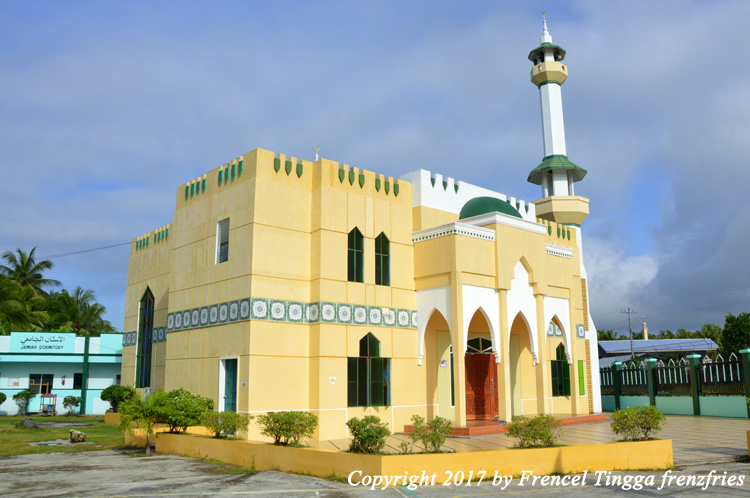
As our boat was approaching, the place kinda reminded me of Taganak Island in Tawi-Tawi. Stilt houses, puppet and damas boats almost surround the island, showing that despite modernization, traditional dwellings and traditional way of life are still present.
We stayed at Sing and Swing Lodge courtesy of the LGU. I love the simple way of life of the locals. A local said that 80% of the population is Muslim. Most of the food products including rice, fruits, mineral water, bread and coffee, come from Sabah. There is a small eatery right in front of the local police that sells Malaysian comfort food. Before tourism started to boom in Balabac, major source of income of the people are from fishing and trade with the nearby Sabah and Malaysian islands. FM radio plays music from Malaysia. A dilapidated Malaysian boat which was intercepted by the local authorities due to illegal fishing in Philippine territorial waters, is showcased like a shipwrecked vessel near the pier. These only show how porous it is going back and forth between Southern Palawan and Sabah.


The main island is home to saltwater crocodiles, making it not so ideal for swimming especially near the port and stilt houses. A few weeks after our visit to Balabac, a seaweed farmer’s 10 year old son was eaten alive by a crocodile. Such a horrific news!
There is an old lighthouse not too far from the town proper.


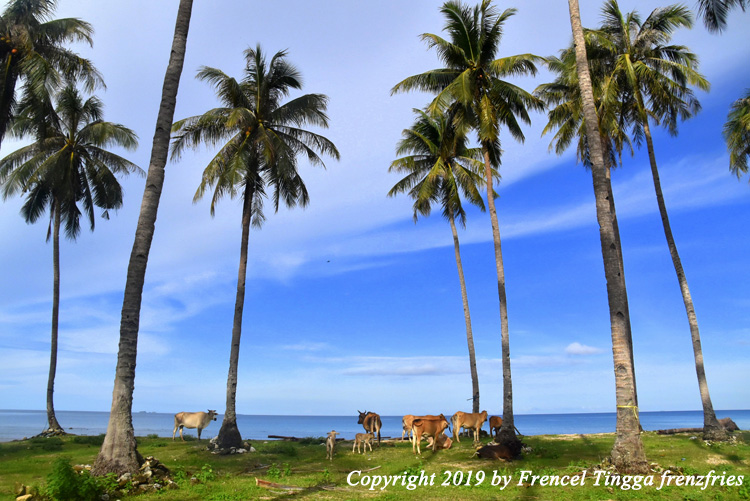
Below the lighthouse is a rocky beach area, which is also the grazing ground of cows.


After our official activity, we requested our local partners to tour us in some of the islands. Tin from the local police arranged everything. Due to time constraint, we requested a puppet boat (which is faster) instead of a regular outrigger boat for island hopping. Pero dahil wala rin makita na available puppet boat, we ended up using the small boat of the Coastguard.
The initial plan was to visit 3 islands but the strong wind and sea condition prevented us from exploring more than one island per day. Islands are far away from each other – perhaps similar distance between Batangas Pier and Puerto Galera. Actually, if the waves are strong and high, island hopping is not advisable. Nonetheless, we were happy to have discovered Camiaran or Pink Island.
Privately owned and uninhabited, this is the only island characterized by immaculate white and pink sands. The fine mix of crushed red and white corals make the sand look pinkish, especially in broad daylight. The island is ideal for picnics and for swimming. It is also surrounded by coral beds, kaya nung naabutan kami ng lowtide we had to wait for more than two hours, para makalabas ang bangka namin.


The next day, we continued our island hopping to Onuk Island. Onuk is smaller than Camiaran but also very beautiful by its own standard. Actually it is dubbed the “Maldives” among the islands in Balabac, very rich in marine life (including pawikan) and with its very own sandbar. The island was recently acquired by a leading property developer in the country. It was off-limits to the public during our visit but thanks to our LGU partner, we were allowed to enter. It has an entrance fee of P1,500 per person but since we were guests, the fees we’re waived. Onuk, by the way, was popularized by the award-winning photo of George Tapan.


Sunset and sunrise in Balabac are breathtaking, peaceful.


I wish I had a longer stay in
Balabac. Prior this trip, whenever I see photos of Balabac online, they look so
madali puntahan. Sa totoo lang napaka-challenging kung nataon na may habagat or
amihan. I heard stories na na-stuck sa island for two to three days longer due
to weather disturbance. But hurdles often make the trip worthwhile.
From Puerto Princesa, take a van going to Rio Tuba (4-5 hours away). In
Rio Tuba, take a passenger boat going to Balabac (4 hours). It would be more
convenient to join organized tours.
JD Lodge/ Sing and Swing
Brgy. 3, Poblacion
Balabac, Palawan
Tel. No.: 0917-5961991